When families start researching senior care in Bay City, one question comes up before any other: What does assisted living actually cost, and what do you get for that price?
It’s the right question to ask, and often a hard one to answer. Every community prices things differently, and comparing brochures side by side rarely provides the assurances families truly need. Given how much rides on getting this right, it’s easy to see why cost sits at the center of every conversation.
This guide walks through what assisted living and memory care actually cost in Bay City, how to decode confusing pricing structures, which floor plans fit which budgets, and where families can find real savings.
How Assisted Living Pricing Works in Bay City
Not every community prices care the same way, and that difference shapes your monthly bill more than almost anything else.
Some facilities advertise a low base rate, then tack on separate fees for nearly everything: medication administration, laundry, extra help getting dressed. These charges add up fast, and they shift from month to month as a resident’s needs change. Families end up budgeting for a moving target, which makes real financial planning almost impossible.
An all-inclusive model fixes that problem at the source. You pay one predictable rate, and that rate covers care regardless of how those needs evolve over time.
How Much Does Assisted Living Cost?
At Symphony Tri-Cities, located at 6700 Westside Saginaw Road in Bay City, all-inclusive assisted living starts at $3,100 per month. Here’s what that single rate covers:
- Care & Health Support:
Personal assistance with daily activities like bathing, dressing, and mobility, plus professional medication management from trained staff. - Dining:
Chef-prepared meals arrive fresh every day, with custom menu options for dietary needs; a signature dessert cart also makes its rounds. - Chore-Free Living:
Staff handle housekeeping, laundry, linen service, and room cleaning, so residents and their families never have to think about any of it again
. - Utilities:
The rate covers every utility except individual phone service, plus facility-wide Wi-Fi and cable TV. - Safety Technology:
In-room call-light systems, alarmed exits, and a full security camera system to keep residents safe around the clock.
The Cost of Memory Care in Bay City
Memory care costs more than standard assisted living, and once you see what sits behind that price, the reason makes sense.
Supporting someone with Alzheimer’s or dementia takes more than compassion. It takes specialized security to prevent wandering, lower staff-to-resident ratios so residents get real individual attention, and specific therapeutic training most caregivers simply don’t have. All of that adds cost, but it also adds protection for a population that needs it most.
At Symphony Tri-Cities, all-inclusive memory care starts at $3,200 per month; just $100 more than standard assisted living, despite the added security and specialized training that come with it.
That investment funds the Monet Inn, Symphony’s dedicated memory care neighborhood:
- Secured Freedom:
Alarmed exits and secured entrances prevent wandering while still letting residents move freely within a safe space. - Designed for Serenity:
Enclosed outdoor courtyards give residents fresh air without added risk, and quiet spots that offer calm moments throughout the day. - Dedicated Programming:
An expertly trained memory care team builds life enrichment programs designed to maintain cognitive function, not just pass the time.
Floor Plans: Matching Your Budget to the Right Space
Few things affect your monthly cost as much as room size, so choosing the right floor plan means weighing budget against space.
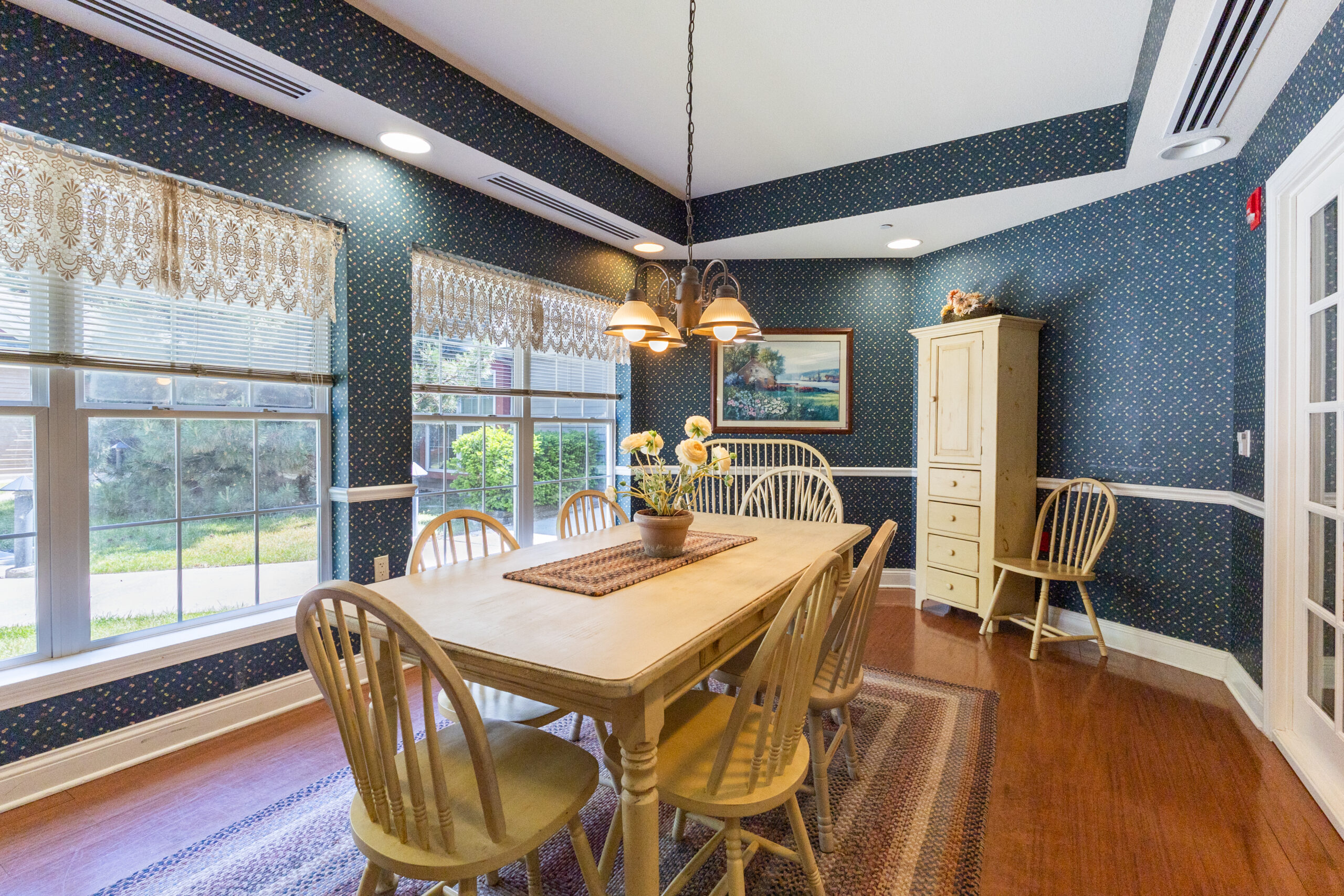
Symphony Tri-Cities designs every private suite to feel less like a facility and more like a cozy cottage.
- Buttercup Suite: The most budget-friendly option, at 268 square feet in assisted living or 310 square feet in memory care. Residents still get a kitchenette, a window seat, a private bathroom with storage, and closet space.
- Coral Bell Suite: A comfortable step up, offering 300 square feet in assisted living or 340 square feet in memory care, with a kitchenette and a larger closet.
- Geranium & Fox Glove Suites: For families who want more room to spread out, these suites offer 450 to 470 square feet, separate living areas, patio access, and dual-view windows that bring in light from two directions.
- Hosta Companion Suite: The smart savings play for couples, or any two residents who’d rather share a space than pay for two. At 530 square feet, with a privacy wall and a shared full bathroom, it stretches a family’s budget further without asking either resident to give up their own space entirely.
Savings Families Often Overlook
The monthly rate only tells half the financial story. Once you account for what you no longer pay for, the real cost of assisted living usually looks smaller than it first appears.
Moving into assisted living eliminates a long list of homeownership expenses families forget to count:
- Home maintenance, lawn care, and winter snow removal
- Property taxes and homeowner’s insurance
- Monthly grocery bills
Add these savings into the comparison, and the gap between staying home and moving to Symphony often shrinks, sometimes it disappears entirely.
Respite Care
If you’re still not sure Symphony is the right fit, Respite Care lets you find out without committing to anything long-term. This short-term stay option gives families a real trial run: the services, the dining, the day-to-day rhythm; before anyone signs a long-term contract.
Planning Ahead: Medicaid and Long-Term Care
Personal savings don’t last forever, and planning for that reality now prevents a painful scramble later.
This is where a continuum-of-care campus pays off. Symphony Tri-Cities offers long-term care rooms in the same cottage-like setting as its other suites, and it holds 42 Medicare and Medicaid certified beds. That means a resident who exhausts personal savings doesn’t have to leave the community they already know to keep receiving care.
That continuity matters more than most families realize going in. Because Symphony offers skilled nursing, memory care, and long-term care all on one campus, residents never face the stress or added cost of moving to a completely different facility as their needs increase. They stay in the same rooms, near the same staff, surrounded by the same community, even as their care evolves.
The True Value of Care
A community centrally located between Bay City, Saginaw, and Midland puts your family within easy reach no matter which of the three cities you call home. That convenience counts for even more once winter sets in. Bay City winters bring real beauty, but they also bring snow that needs shoveling and ice that turns driveways into hazards: chores that quietly become dangerous for seniors living alone.
The real cost of assisted living was never just a dollar figure. Measure it in the time it gives back to families, the safety it restores to seniors living alone, and the relief that comes from knowing someone you love is genuinely cared for.
If you are ready to see what that looks like in person:
Take a virtual video tour, or call the Bay City campus directly at (989) 667-9800 to talk through a care plan built around your family’s needs.
If you prefer to skip the forms entirely, tap the live chat icon on the Symphony website and get your questions answered right now.